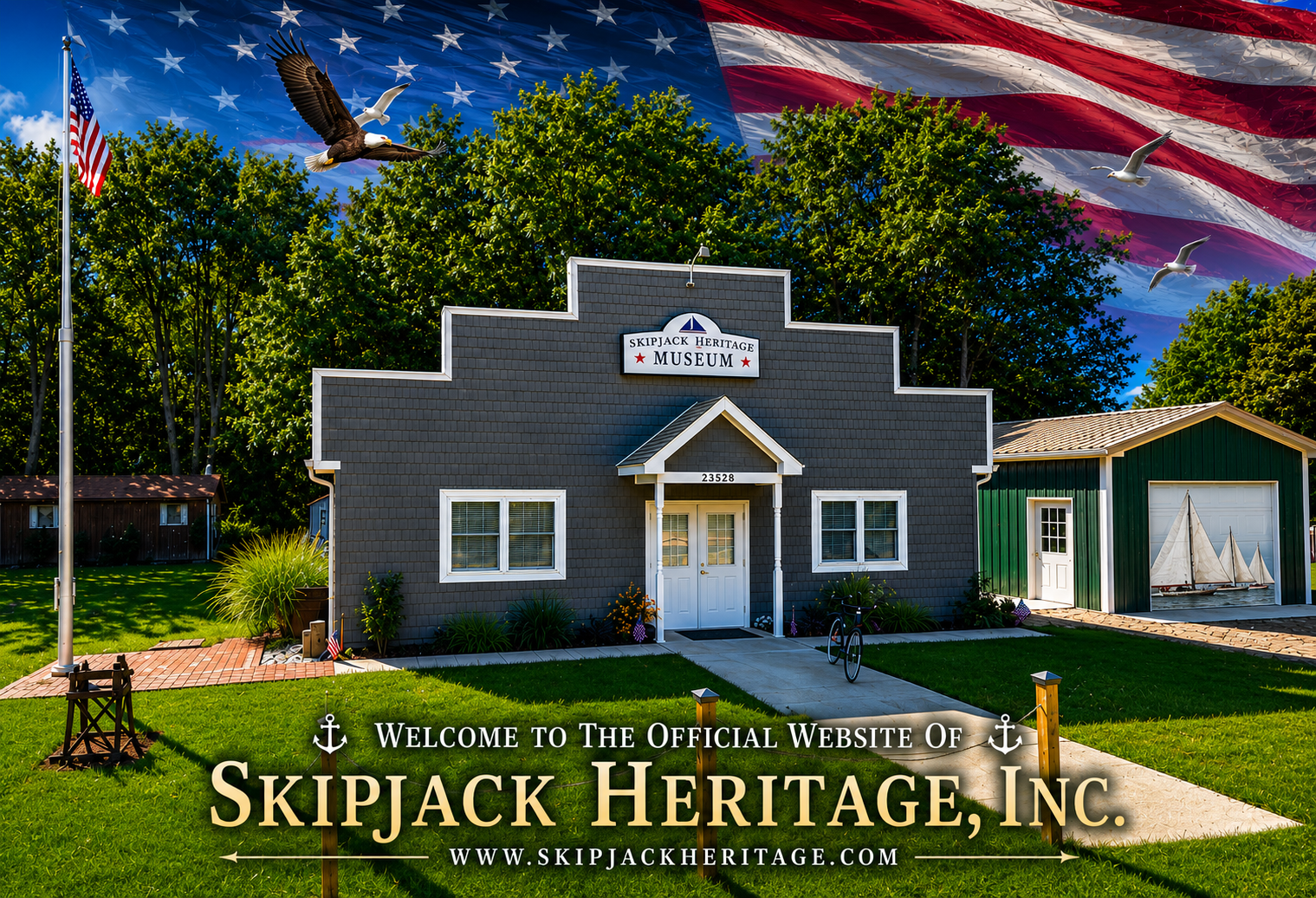
to our website. Here, you’ll gain a deeper appreciation for what Skipjack Heritage, Inc. is all about—who we are, what we do, and our passion for preserving what we believe to be some of the most historic and legendary vessels ever built, worked, and sailed on the Chesapeake Bay, along with the dedicated captains who guided them.
Skipjack Heritage, Inc. highlights both working and non-working skipjacks that remain in use and seaworthy today, while also honoring the memory of past vessels—skipjacks, bugeyes, and others—that were once part of the lower Delmarva region. We celebrate not only the boats themselves, but also their owners, captains, crews, and families.
What makes Skipjack Heritage, Inc. especially unique is our broader mission. Beyond the vessels, we are committed to preserving the heritage and legacy of greater Deal Island, Maryland, and the surrounding communities—their history, people, faith, and culture. (See our Deal Island History page)
We are a close-knit and, in many ways, insulated community within Somerset County, Maryland—one that many have chosen to remain a part of for generations. Our way of life is deeply rooted in community, shaped by our traditions, our people, our distinctive speech and dialect, our local foods, and our enduring dependence on the Chesapeake Bay. These elements are not just customs—they are an essential part of who we are.
We are committed to preserving and protecting this heritage for future generations. We owe it to our history, to the many ancestors who spent their lives working the water with dedication and pride, and to the generations to come who deserve to know and carry forward that legacy.
It has been one of our greatest honors to take ownership of the iconic"Skipjack, City of Crisfield" ............(also see this link from the Chesapeake Bay Magazine)built for Gus Forbush of Crisfield by C. H. Rice and his son Ed in Reedville, Virginia in 1949. She was Captained by "Daddy Art Daniels" for many years. His sons Stan, Bob and Terry Daniels also captained her dredging oysters, etc.Captain Art Daniel........., who has passed away, went home with the Lord in 2017 and saw his family donate her to Skipjack Heritage, Inc.who has secured many donations, grants where she is once again getting rebuilt to sail the Chesapeake Bay waters. Taking on the responsibilty of getting her seaworthy again has been a great testimony not only for Skipjack Heritage, but those from the local community, working and retired Skipjack captains, enthusiasts
Captain Art, sons and grandson gittin'r done on the City of Crisfield
who have personally sacrificed and volunteered their time and sweat. It is our hope to complete this task will happen by the end of 2026.
As of this writing she has been totally fiber-glassed! We have anew mast, boom, sails and the rigging to install. It has been a long process that will be completed in the coming months. What a great day of Celebration that will be.
To anyone and everyone who has contributed past, present and are considering to offer a selfless financial donation or have provided hours of restoration work to make our goal come true ..... we say "THANK YOU" from the bottom of our hearts!
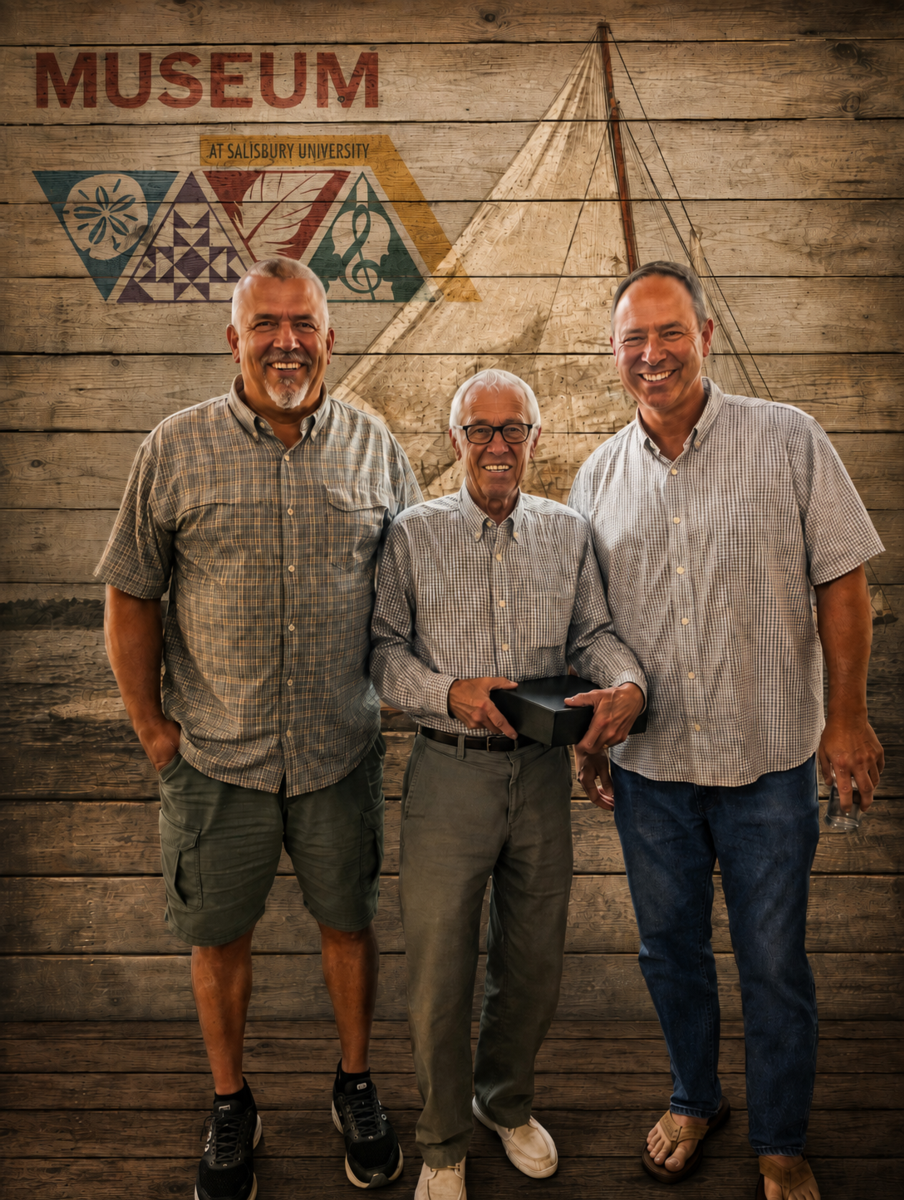
The Skipjack Heritage Museum is run and supported by dedicated board members and local volunteers. Our knowledgeable staff are always available to answer questions and enhance your visit. We welcome and encourage contributions of photographs, documents, and artifacts to help enrich and preserve the Heritage for future generations.
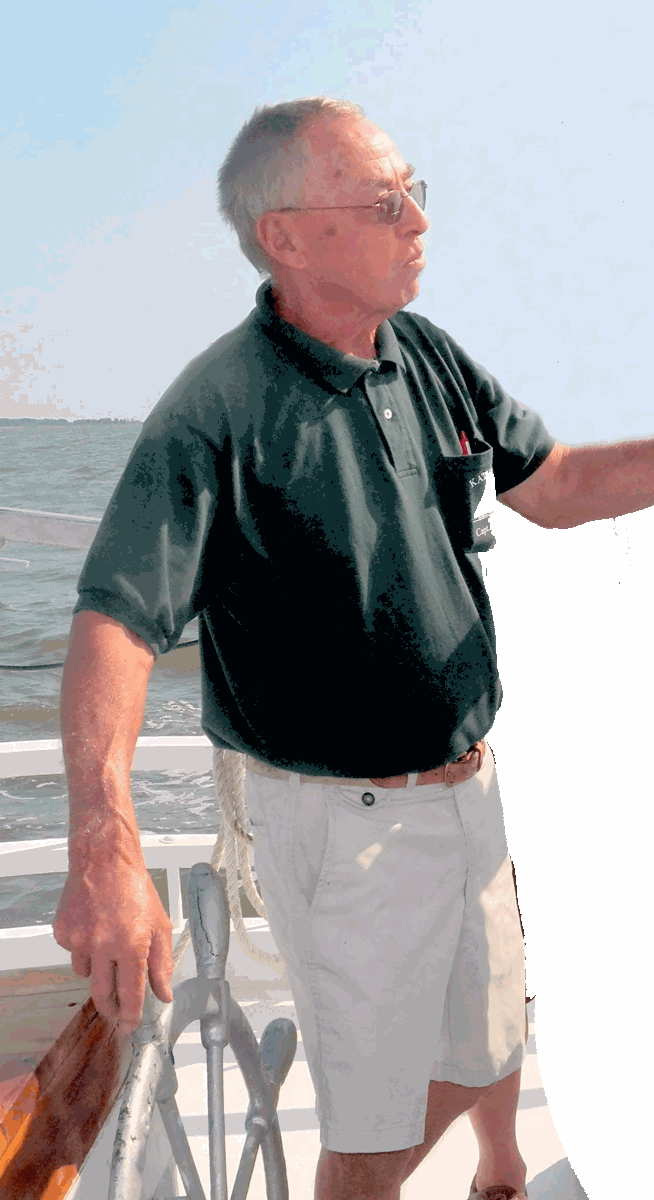
President of Skipjack Heritage, Inc.: Capt. Stoney Whitelock
The day-to-day operations, museum maintenance and restoration efforts (such as work on the historic skipjack City of Crisfield) are run entirely by dedicated local volunteers and an active Board of Directors.
What you’ll see there:
Chesapeake Bay skipjack history and restoration projects
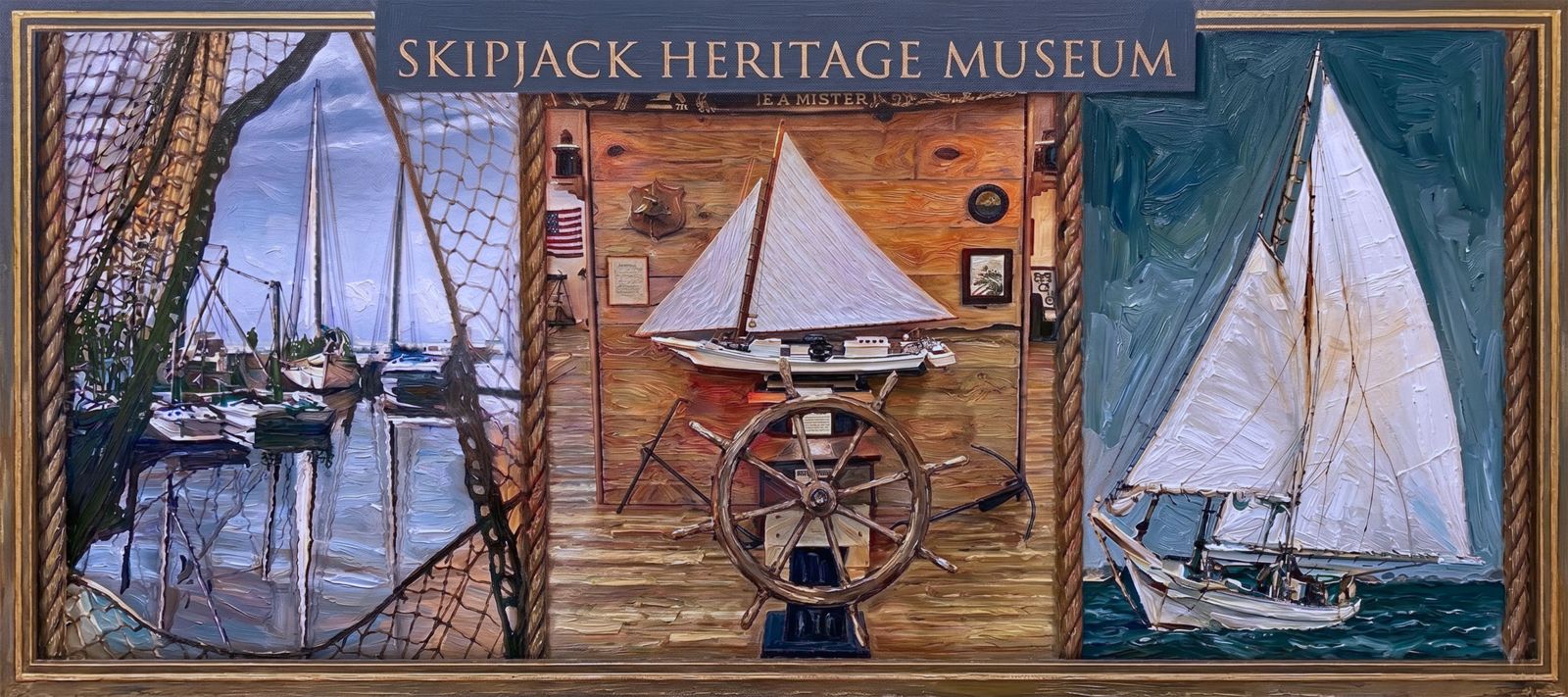
Maritime artifacts and model boats
Watermen heritage exhibits
Historic photographs from Deal Island, Smith Island and Tangier Sound
Ongoing restoration work on historic vessels such as the City of Crisfield
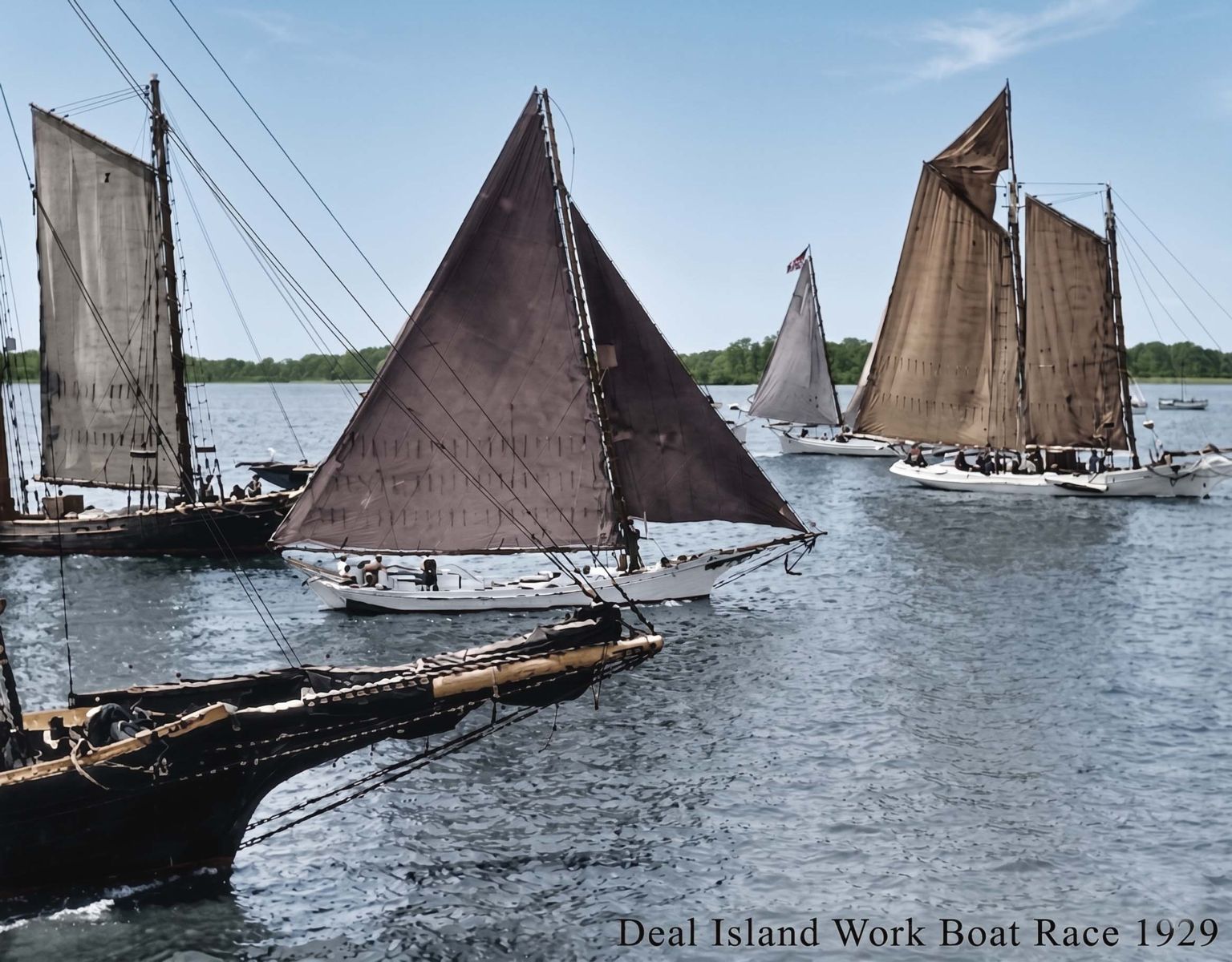
The museum is closely tied to the annual Deal Island Skipjack Races and Festival, one of Maryland’s longstanding maritime traditions.
Community visitors often describe it as small but packed with local history and staffed by knowledgeable volunteers.
Our Mission
The Skipjack Heritage Museum: Located in Chance, Maryland, the museum houses a vast collection of local artifacts, historical photographs, vintage oystering gear and models that document the lives of the watermen and families of Deal Island and the surrounding region.
Preserving the Skipjack legacy: The museum's primary mission is to preserve the history of the skipjack, America's oldest working sailing vessel, including its restoration and keeping the history of the greater Deal Island relavent. The organization actively works to preserve the physical symbols of Chesapeake history. This includes maintenance and restoration efforts for historic wooden skipjacks, such as the City of Crisfield, ensuring these traditional oyster-dredging vessels are kept alive for future generations.
Educating future generations: We use model boats, photos and artifacts that we house to the credit of our local community to educate both current and future generations about the life of a waterman.
Showcasing maritime heritage: Our museum exhibits highlight the island's commercial fishing industry, its captains and the broader maritime heritage of the upper Tangier Sound. To illustrate the special heritage of the communities of the greater Deal Island municipalities has a deep meaning to our communities and those who have unselfisly contributed to our cause.See our media page for pictures of items on display in the Museum.
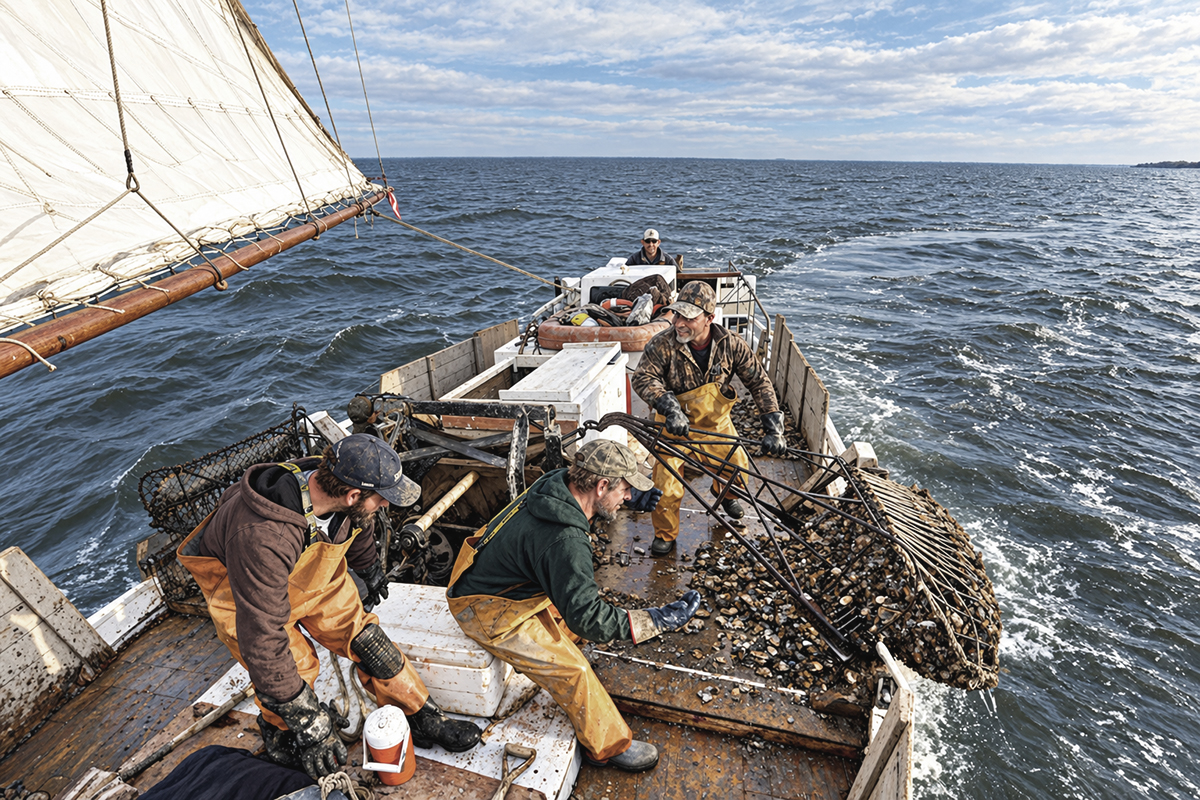
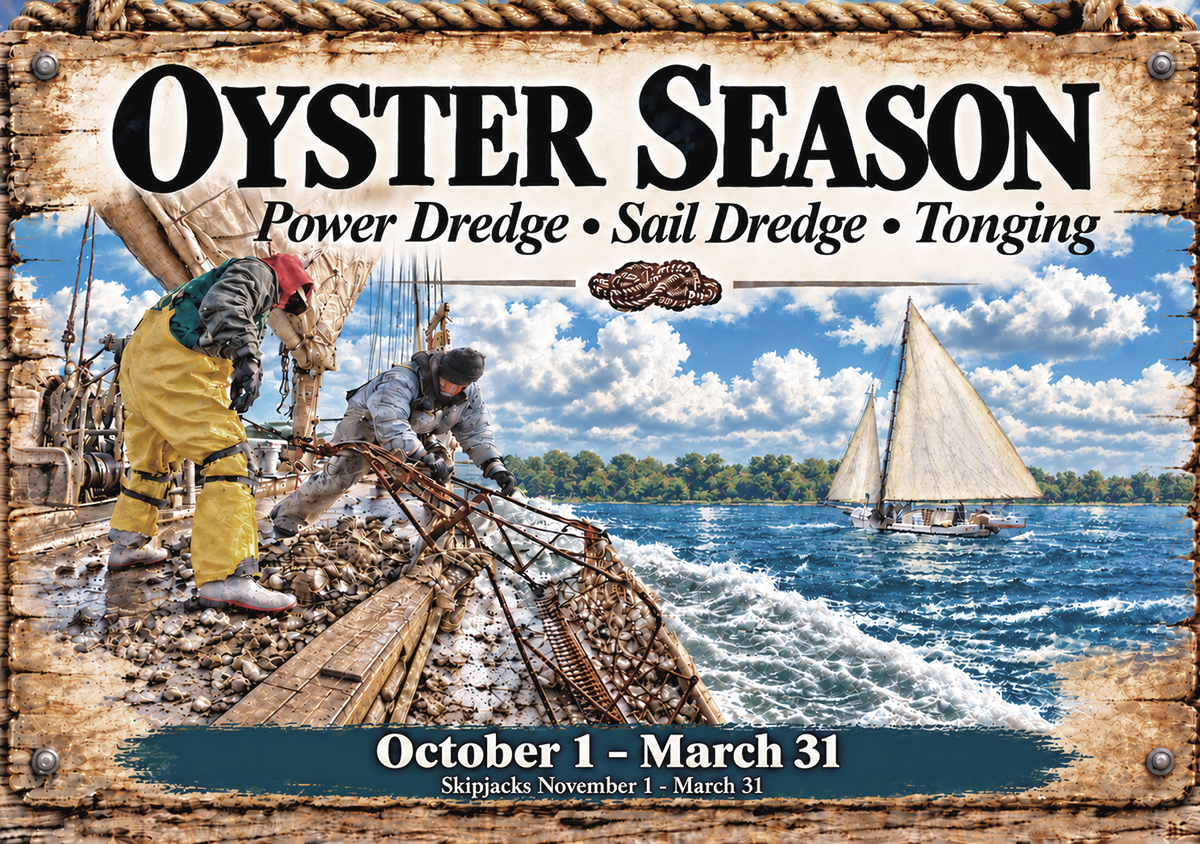
Focus on local history: We document and preserve the stories and history of the local communities, going beyond just the maritime aspects to showcase the broader way of life in the area. The Skipjack being indicative to Deal Isand and its local communities was a hub for the thriving oyster trade. The boats were central to the economy, providing a livelihood for generations of local watermen and their families.
Community involvement: We rely on items and oral histories donated by local residents to build their collections, ensuring the community's direct involvement in preserving its own story.
Funding: Operations, museum admission and restoration projects are funded through community donations, local raffles, and modern fundraising platforms (like Zeffy) to keep admission and educational resources accessible to the public.
The importance of Skipjack Heritage, Inc. lies in the fact that these vessels and the communities built around, the various ethnicities represent the defining chapter of the Chesapeake Bay’s identity. The skipjack is not just a boat; it is a symbol of a unique American way of life, an ecological barometer and a triumph of local maritime engineering.
1. The Last Vestige of American Sail
The Chesapeake Bay skipjack is the last remaining fleet of working sail-powered fishing vessels in North America.
A Living Fossil: While other commercial fisheries transitioned entirely to motorized boats over a century ago, Maryland law historically mandated that oyster dredging under power was restricted, keeping commercial sail alive well into the 21st century.
Vanishing History: At the peak of the oyster industry in the late 19th and early 20th centuries, thousands of skipjacks sailed the bay. Today, only a handful of authentic, historic skipjacks remain afloat, making every surviving hull a priceless, living artifact.
2. A Masterpiece of Local Engineering
Skipjacks are a masterclass in adapting design to a specific environment. Developed in the 1890s as a cheaper, simpler alternative to the massive bugeyes and pungies, they were custom-built for the challenging conditions of the Chesapeake:
The Design: They feature a shallow-draft, V-bottom hull to navigate treacherous, shifting shoals and a massive, raked mast pushing a colossal sail area to provide the immense power needed to drag heavy iron oyster scrapes across the bay floor.
Built by Eye: Most historic skipjacks were built without formal blueprints. Local shipwrights used half-models and built them "by eye" using native timber like loblolly pine and white oak. Preserving this heritage keeps traditional wooden shipbuilding techniques alive.
3. Preserving the Watermen Culture
Skipjack Heritage, Inc. and the other maritime museums, organizations, Skipjack websites-organizations, etc. is ultimately about the people—the watermen, captains, families and tight-knit island and coastal communities (like Deal Island, Tilghman Island, and Smith Island) who braved brutal winter elements to harvest oysters.
A Distinct Way of Life: This culture fostered a unique dialect, rich oral traditions, distinct gospel and maritime music, and a deep, multi-generational reliance on the rhythms of nature.
Family Legacies: For many local residents, Skipjack Heritage Inc. is deeply personal. It represents the literal ancestry of their grandfathers and great-grandfathers who stood on those freezing decks to provide for their families.
4. Ecological and Economic Lessons
The history of the skipjack is inextricably linked to the environmental history of the Chesapeake Bay.
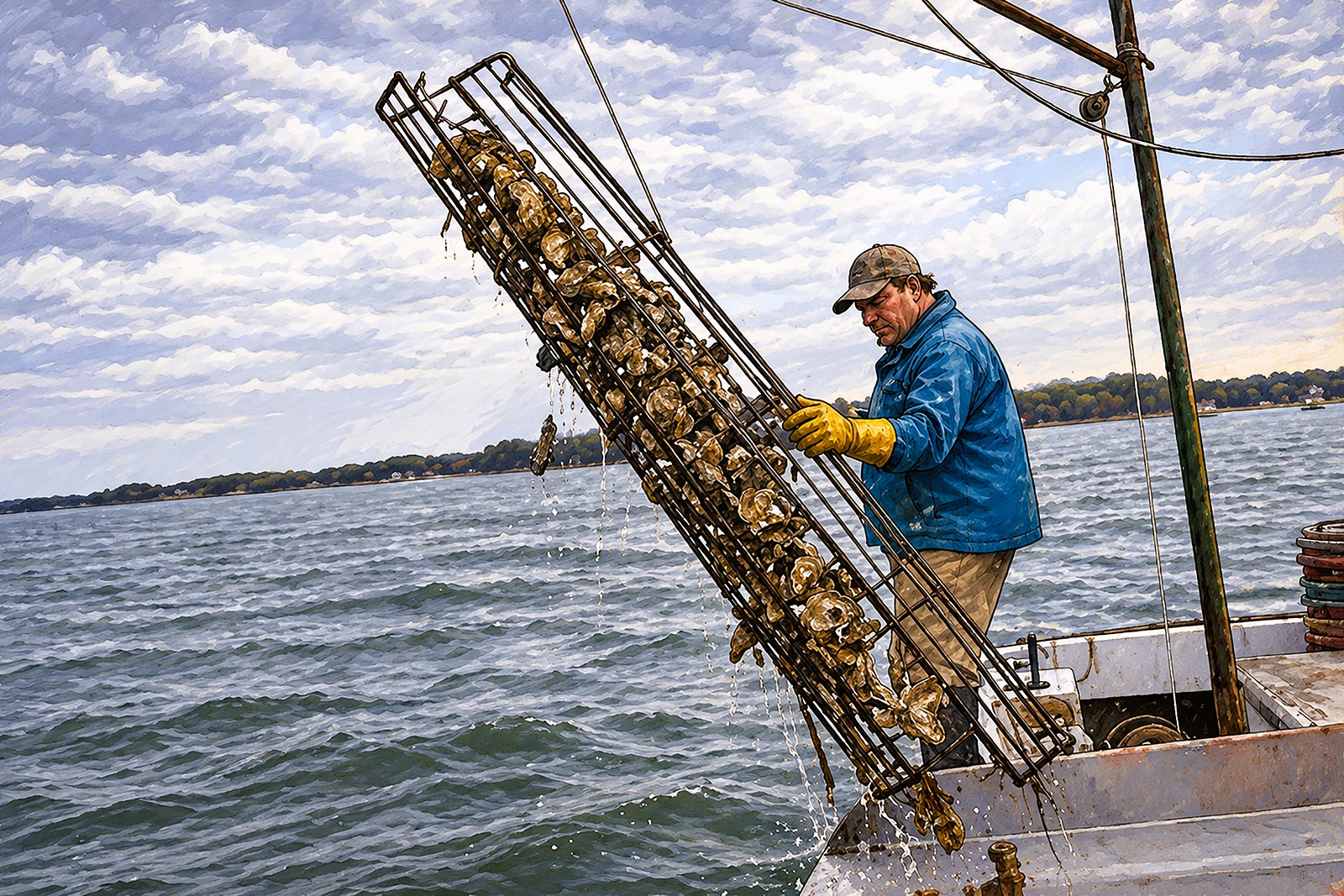
The Oyster Boom and Bust: The story of the skipjack tracks the rise, over-harvesting and modern restoration efforts of the eastern oyster.
A Lesson in Sustainability: Studying how these communities balanced economic survival with the health of the bay’s natural resources provides invaluable lessons for modern marine conservation and sustainable fishing practices.
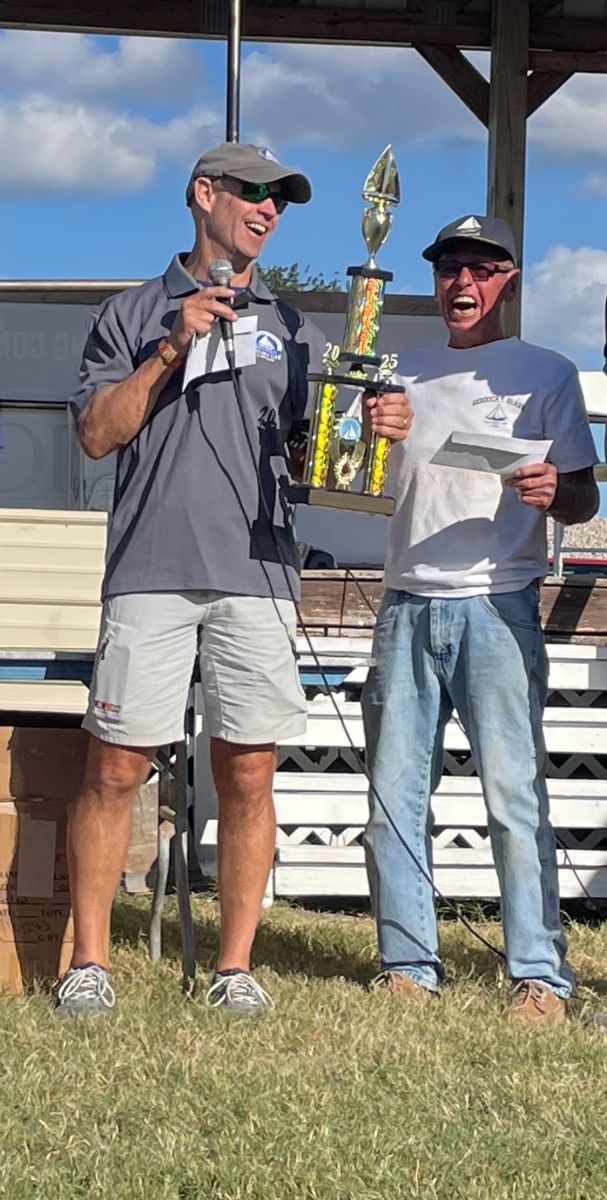
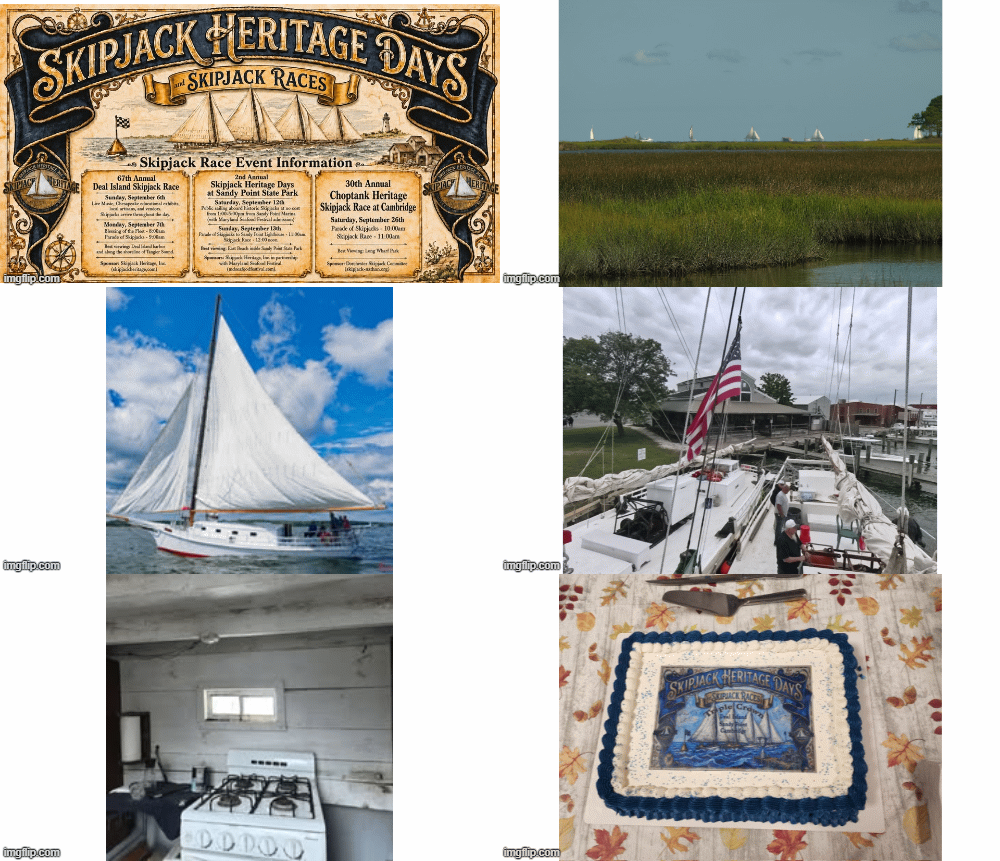
in September-- Labor Day, " (#1)Deal Island Skipjack Race, (#2)Skipjack Heritage Days; Sandy Point Skipjack Race and the (#3)Choptank Heritage Festival; Cambridge Skipkack Race ensure that this history doesn't just sit in a textbook or a dusty display case. By maintaining the vessels, documenting family genealogies and celebrating the community's roots, they allow new generations to step aboard a piece of living history, feel the pull of the canvas and understand the grit it took to build a life on the water.
6. Who visits the Skipjack Heritage Museum?
Descendants & Local Families
A significant portion of visitors includes families rooted in the lower Delmarva and Tangier Sound regions.
Many visit specifically to trace their roots, explore local historical documentation or view artifacts, photographs and models connected to their ancestors.
It's common for grandchildren and relatives of original boatbuilders, captains and crews to visit to see the legacy of their family's work preserved firsthand.
Maritime History Enthusiasts & Modelers
The museum attracts researchers, historians and hobbyists fascinated by North America’s last commercial sailing fleet.
Visitors include those highly interested in the design, restoration, and historical accuracy of classic skipjacks (such as the City of Crisfield and others).
Model ship builders and naval history buffs frequently visit to study the extensive collection of detailed boat models and authentic, weathered tools of the trade on display.
Heritage Tourists & "Day-Trippers"
Travelers exploring the Eastern Shore and Somerset County often stop by to immerse themselves in authentic regional culture. These visitors are drawn to:
The museum's exhibits on the demanding lifestyle of oyster dredging and the working sailboats that enabled oysters to be harvested from the Chesapeake Bay waters, their captains and crew.
The unique local dialect (dating all way back to the 1600s, the British occupation of the area, etc.), faith and traditions of a close-knit, insulated island community. The majority of Skipjack Heritage’s volunteer and museum staff, along with members of its Board of Directors, are direct descendants of the original settlers of Smith Island, Deal Island and the surrounding connected communities of Somerset County whose family roots trace back to the seventeenth and eighteenth centuries.
Our deep ancestral ties to the Chesapeake Bay and Tangier Sound region provide the organization with a unique connection to the maritime traditions, watermen culture and local history it works to preserve. Through family stories, inherited knowledge and generations of experience on the water, our descendants continue the legacy of the communities that helped shape the heritage of Maryland’s lower Eastern Shore.
Like many long-established isolated bay communities, the families of Smith Island, Deal Island, Tangier Sound and neighboring areas are deeply interconnected through generations of marriage and shared ancestry. In many cases, members of the organization are indeed distant cousins whose family lines intertwine through some of the region’s oldest surnames and settlements. That close kinship reflects the strong communal bonds that have long defined the culture and heritage of Somerset County’s island and waterfront communities. We all have ten fingers and ten toes:>)
Through family stories, inherited knowledge and generations of experience on the water, our descendants continue the legacy of the communities that helped shape the heritage of Maryland’s lower Eastern Shore. Many of our families have remained rooted in the Chesapeake Bay region for generations, preserving traditions tied to the water, boating, fishing, crabbing, oystering and island life.
Over generations, a relatively small number of founding families became deeply rooted in the region. Many modern Deal Island, Chance (Rock Creek), Dames Quarter, Fairmont, Smith Island, Mt Vernon, Oriole and Tangier Sound, etc. families descend from these early settlers. Common ancestral surnames historically connected to the area include: (Do you share a surname from the below list?)
The early settlers of Smith Island and Somerset County were overwhelmingly of English ancestry, with smaller contributions from Welsh, Scottish, Irish, and later some German families. Most arrived during the seventeenth and eighteenth centuries, many migrating northward from Virginia’s Eastern Shore or directly from England. Enslaved Africans and free Black watermen were also part of Somerset County’s history from the colonial period onward.
Educational Groups & School Field Trips
As part of its core outreach mission, the museum hosts students and youth groups. These educational trips introduce younger generations to marine science, local ecology and the traditional maritime skills that shaped the Chesapeake Bay's history.
“Each donation, small or large, contributes to “Preserving the Heritage” of our State Boat, the Skipjack. Would you consider supporting our mission to preserve, maintain and benefit from these historic Maryland boats in our Chesapeake Bay?”
Feel free to explore our site and browse the various histories, which will be updated regularly. You’ll also find plenty of photos that help bring each subject to life and give you a better sense of what’s being shared.

 te. Here, you’ll gain a deeper appreciation for what Skipjack Heritage, Inc. is all about—who we are, what we do, and our passion for preserving what we believe to be some of the most historic and legendary vessels ever built, worked, and sailed on the Chesapeake Bay, along with the dedicated captains who guided them.

 years. His sons Stan, Bob and Terry Daniels also captained her dredging oysters, etc.

 new mast, boom, sails and the rigging to install. It has been a long process that will be completed in the coming months. What a great day of Celebration that will be.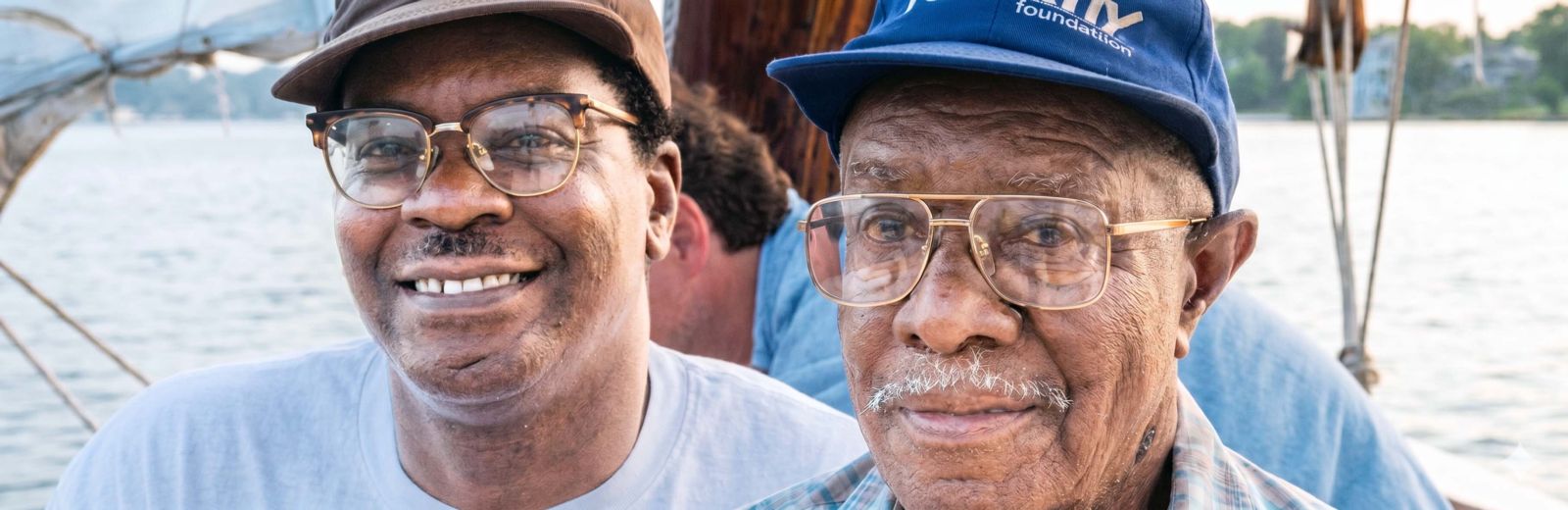
 vessel, including its restoration and keeping the history of the greater Deal Island relavent.





.png)